Check the starting point
- Distinguish straight and curved boundaries
- Count the sides and corners of a closed shape
Show the idea
A triangle keeps its name when turned
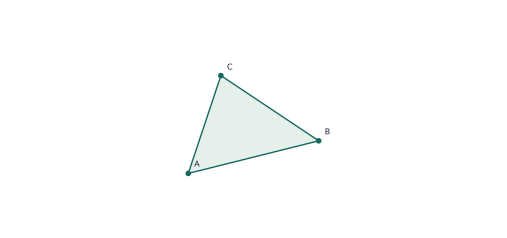
This closed shape has three straight sides and three corners. Its direction does not change its name.
Work through an example
Use the labelled model to explain: a triangle keeps its name when turned.
- Look at a shape’s edges and corners when you describe it. Turning a shape does not change its name.
- This closed shape has three straight sides and three corners. Its direction does not change its name.
Answer: This closed shape has three straight sides and three corners. Its direction does not change its name.
Teach in small steps
- Check the starting skill together: Distinguish straight and curved boundaries. If this is uncertain, use the objects or drawings before beginning the worksheet.
- Trace the three sides of a paper triangle, stopping at each corner. Rotate the paper and trace again.
- Compare a square and a circle by touching their boundaries. Ask for a property rather than a colour or size.
- Let your child attempt this fresh example: Draw a square and mark each corner with a dot. How many dots? Ask them to show the representation before checking the solution. Then use the application and checkpoint pages on later sessions.
Ask and listen
- Can a triangle be made with only two straight sticks?
- What part of the model helps you check your answer?
Adapt the practice
More support
Read prompts aloud and let your child point, move objects or answer orally. Keep the quantities visible before asking for a written answer.
More challenge
Ask your child to create a different example of the same idea and explain how to check it.
Look for understanding
- Your child can count the sides and corners of a closed shape.
- Your child can explain this point and use it in a fresh problem: A shape’s name does not depend on which way it points.
Choose the next step
When your child can explain the model and complete fresh practice with little help, use the application problems. If the checkpoint reveals uncertainty, return to this starting skill: Distinguish straight and curved boundaries.
Put the idea into practice
The matching topic collection includes learn-and-practise, application and checkpoint PDFs with worked answers. Download the free preview to see representative pages.
Explore this topic’s worksheets