Check the starting point
- Read a list of undirected edges
- Distinguish a vertex from a crossing in a drawing
Show the idea
A four-vertex cycle
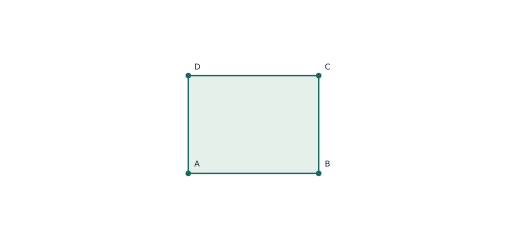
Edges AB, BC, CD and DA form one connected cycle. Every vertex has degree 2; the shape of the drawing is not a geographical claim.
Work through an example
A four-vertex cycle — explain the representation.
- Edges AB, BC, CD and DA form one connected cycle. Every vertex has degree 2; the shape of the drawing is not a geographical claim.
- Connect the labels to the calculation or rule. A crossing in a network picture is not automatically a vertex.
Answer: Edges AB, BC, CD and DA form one connected cycle. Every vertex has degree 2; the shape of the drawing is not a geographical claim.
Teach in small steps
- Begin with a short oral check: ask your child to read a list of undirected edges. Then check that they can distinguish a vertex from a crossing in a drawing. Revisit either skill before adding a new procedure.
- Explore “A four-vertex cycle” together. Edges AB, BC, CD and DA form one connected cycle. Every vertex has degree 2; the shape of the drawing is not a geographical claim. Ask your child to point to the quantities or features used at each step.
- Model the example: A network has edges AB, BC, CD, DA and AC. Find vertex degrees. Pause before each step and invite a prediction. A touches AB, DA, AC; C touches BC, CD, AC. B and D each touch two edges.
- Work together on the first new practice question: For a network with edges AB, AC, BC and CD, find the degree of each vertex. Have your child attempt the remaining learn questions with less help, then move to apply. Use the checkpoint on a later attempt to see which ideas are retained.
Ask and listen
- An undirected network has edges AB, BC, DE and EF. How many connected components does it have?
- A diagram has two crossing edges but no vertex at their crossing. Can a route switch from one edge to the other there?
Adapt the practice
More support
Return to “A four-vertex cycle” and explain one label or step at a time. A crossing in a network picture is not automatically a vertex. Let your child show a calculation, drawing or spoken explanation before requiring a polished written answer.
More challenge
Try this application after the core method is secure: A delivery network has direct edge AC of weight 9 and edges AB = 3, BC = 4. Compare the two routes from A to C. Then ask which assumption or input could be changed and what would need to be recalculated.
Look for understanding
- The learner can complete and explain this checkpoint task: Six edges join distinct vertex pairs in an undirected network without loops. What is the sum of degrees?
- The learner can address the reasoning or error-checking question: A diagram has two crossing edges but no vertex at their crossing. Can a route switch from one edge to the other there? Accept a correct alternative method, but ask for the mathematical reason.
Choose the next step
If both checks can be explained without prompting, continue to Quartiles, boxplots and distributions. If a method is still uncertain, repeat the visual example with fresh numbers before progressing.
Put the idea into practice
The matching topic collection includes learn-and-practise, application and checkpoint PDFs with worked answers. Download the free preview to see representative pages.
Explore this topic’s worksheets